
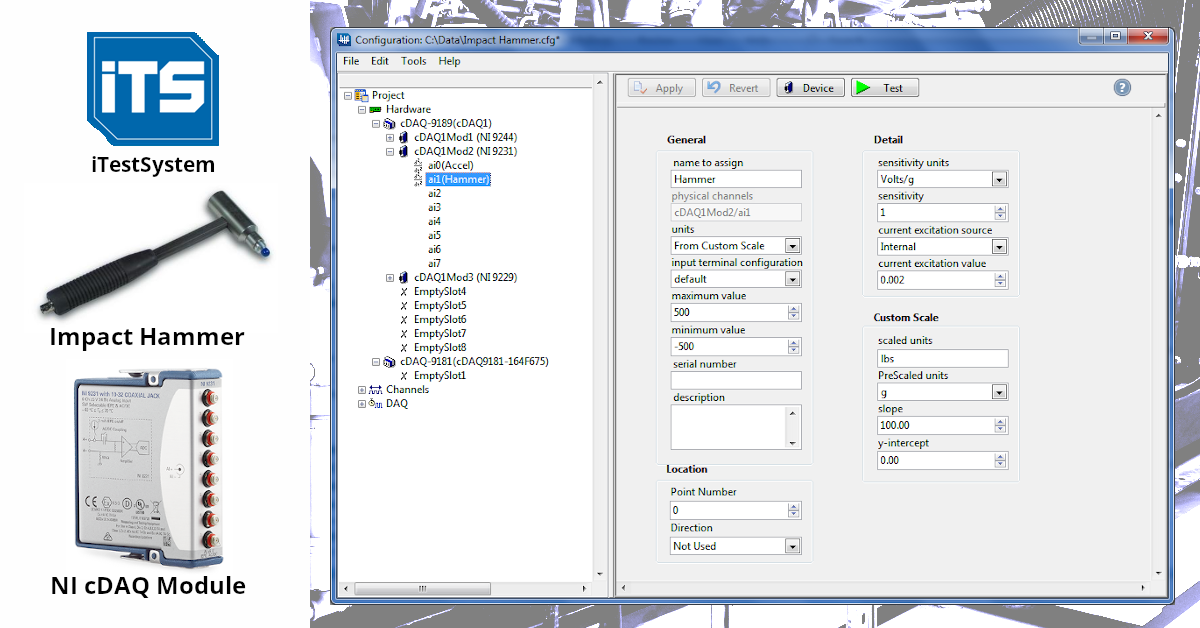
While iTestSystem is designed to collect data from specific sensor types like strain, voltage, current, and accel; custom signal types such as pressure, displacement, and force can also be configured by utilizing the Custom Scale functionality during the channel creation process.
For example, manufacturers often need to measure the amount of force required to install a component using a calibrated impact hammer. Since iTestSystem does not have a specific channel type for impact hammers, we must create one using a similar channel type. The channel type most similar to an impact hammer is the accelerometer channel.1
To configure a piezoelectric impact hammer in iTestSystem, first create an accelerometer channel. An accelerometer channel will supply the impact hammer with IEPE constant current. From the accelerometer configuration window, change the Units to “From Custom Scale”, set the sensitivity to 1, and set the sensitivity units to Volt/g. Next, set the custom scale: scaled units to lbs, lbf, or N, Prescaled Units to g, and in the slope field, input the lbs/Volt value from the hammer’s calibration sheet. After entering these settings, be sure to hit the Test button to verify your signal and save the settings after verification.
Notes
- Most impact hammers are piezoelectric and require IEPE constant current excitation. Several iTestSystem compatible National Instruments (NI) cDAQ input modules (NI-9230, NI-9231, NI-9232, and NI-9234) can supply IEPE excitation for an impact hammer. These modules are typically used for piezoelectric accelerometer inputs.
For a free trial of iTestSystem including the custom scale settings or to learn more about impact hammer measurements, contact chase.petzinger@itestsystem.com.
Need a custom measurement configured in iTestSystem? Talk to the engineers who build these setups.
Related solutions
iTestSystem Software
The acquisition and analysis platform where custom scales, channel setup, and impact measurements are configured. Explore →
Data Acquisition
NI cDAQ hardware and IEPE input modules that power piezoelectric sensors like impact hammers. Explore →
Testing Services
Impact, modal, and structural testing performed by ITM’s engineering team. Explore →
Recent insights
-
 Aerospace Engineering, Aerospace Testing, Blue Origin, Engineering, ESCAPADE Mission, Launch Vehicle Engineering, New Glenn, Rocket Reliability, Strain Measurement, structural health monitoring, Structural Testing
How Pre-Launch Structural Testing Ensures Mission Success
When Blue Origin’s New Glenn rocket successfully launched NASA’s ESCAPADE mission to Mars, it marked a historic step forward for commercial launch technology — and a testament to the unseen engineering that happens long before a vehicle ever reaches…
-
 6D Testing & Analysis, Accelerometers, data acquisition systems, design validation, Engineering, engineering measurement, experimental modal analysis, impact hammer testing, mechanical engineering, modal testing, structural dynamics, Structural Testing, vibration testing
Free Engineering Guide: How to Perform Experimental Modal Analysis for Better Structural Insight
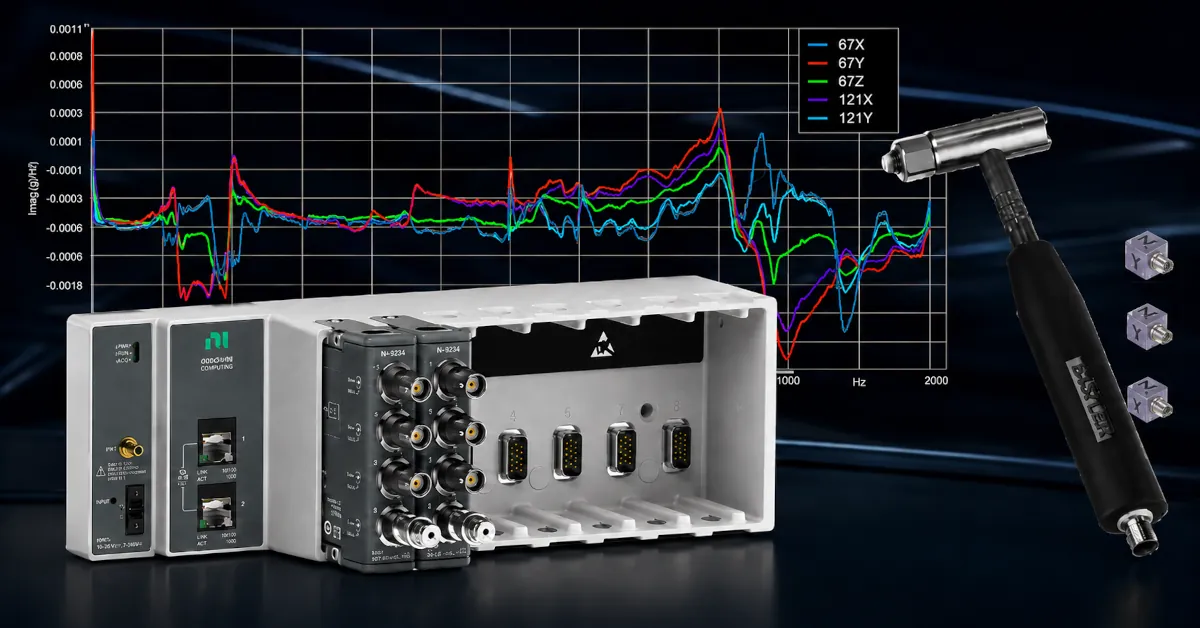
Understanding how structures vibrate—and why—is essential across nearly every engineering discipline. Whether you’re working on rotating machinery, industrial equipment, robotics, medical devices, heavy vehicles, consumer products, or building-scale…
-
 AWS IoT Analytics, cDAQ-9189, Channel Synchronization, CompactDAQ, Condition-Based Maintenance, Edge-to-Cloud High-Channel Datalogging, Engineering, Instrumentation, iTestSystem, iTestSystem Automated Analytics, iTestSystem Notification Service, NI-9236, NI-9469, Strain, Stress, structural health monitoring
High Channel Count Synchronous Datalogging
When a manufacturer needed to validate the structural performance of a 38-ton on-highway vehicle, ITM deployed a 200+ channel synchronous datalogging system capable of capturing accelerometer, strain, GPS, and speed data at nearly 2 kS/s per channel…