
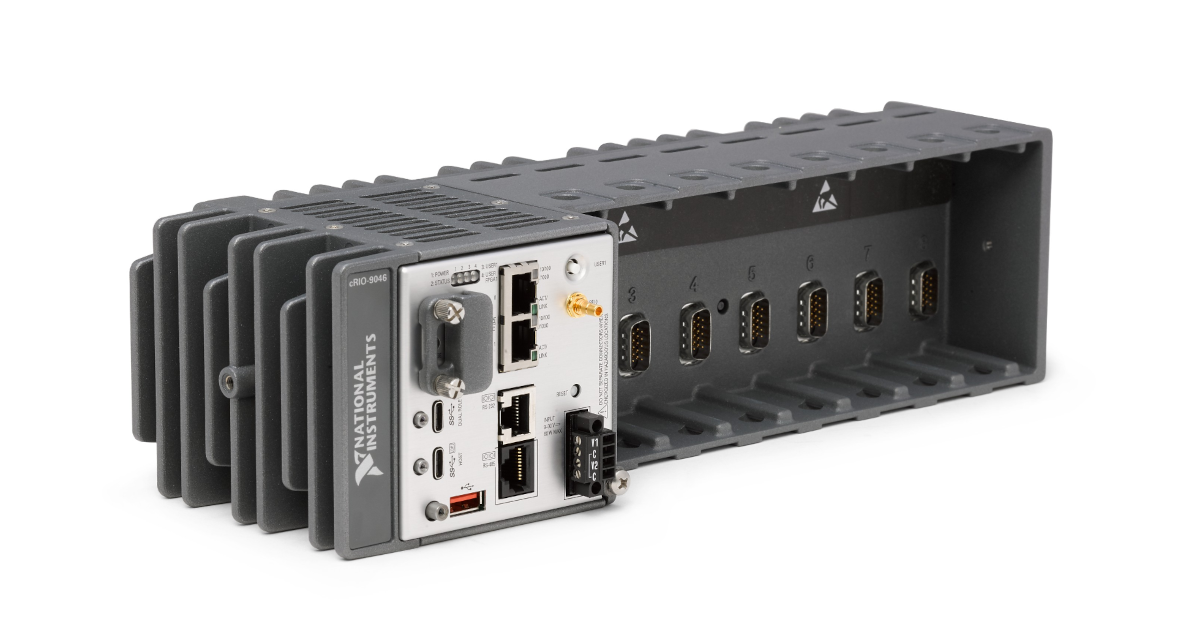
One of the tools our embedded software engineers commonly use for industrial control and process monitoring applications is the NI CompactRIO (cRIO) controller. These controllers let our engineers deploy autonomous systems that use complex algorithms to generate process outputs or key performance indicators (KPIs) from structural, vibration, and process monitoring sensors.
For example, in one of the latest industrial boiler monitoring applications, we embedded a cRIO-9046 controller with our Sootblower Fouling Detection (SFD) algorithms which are used to compute and then output equipment health and process efficiency KPIs. Let’s take a look at the cRIO-9046 controller’s specifications, functionality and programming.
cRIO-9046 is an 8-Slot CompactRIO Controller that has an Intel Atom 1.30 GHz Dual-Core CPU, 2 GB DRAM, 4 GB Storage, a Kintex-7 70T FPGA that can operate from -40 °C to 70 °C. The eight slots are used for C-Series conditioned IO modules that connect sensor inputs and data/control outputs and buses.
Its operating system, NI Linux Real-Time (64-bit), allows real-time performance with the usability desktop operating systems. Our engineers use Xilinx Kintex-7 7K70T FPGA to implement high-speed, (MHz) low-latency hardware-level data processing and decision-making. The cRIO-9046 also has several connectivity ports, including 2x Gigabit Ethernet, USB 3.1, USB 2.0, RS232, and RS485 ports.
Embedded LabVIEW developers can use these ports and standard communication protocol toolkits to develop standard or custom machine/system interfaces.
For a cRIO-9046 or other CompactRIOs to operate, custom LabVIEW RT applications must be developed and then deployed to each controller. Depending on the complexity of your application, you may also need to develop and deploy LabVIEW FPGA code to the cRIO’s FPGA. Over the years, our embedded software engineers have developed a standard architecture as well as software tools for communication and analysis routines to simplify the custom LabVIEW RT application development. They also have experience developing embedded LabVIEW FPGA code for advanced hardware-level signal processing.
For more information about the cRIO-9046 and our LabVIEW development capabilities, contact Mark Yeager via email at mark.yeager@itestsystem.com
Related Links
- Archiving Process data from a cRIO
- Building a Modern User Interface with LabVIEW
- Process Optimization with Embedded Monitoring Systems
Need a rugged embedded controller for your next monitoring application? Talk to the engineers behind this cRIO integration.
Related solutions
Edge Solutions
Embedded controllers, algorithms, and KPI outputs deployed at the edge — from cRIO condition monitoring to full packaged systems. Explore →
The Edge Platform
Embedded acquisition, analytics, and cloud/historian connectivity built on the cRIO and cDAQ platforms. Explore →
Edge Nodes
Ruggedized embedded controllers and I/O, like the cRIO-9046, built to run standalone in the field. Explore →
Recent insights
-
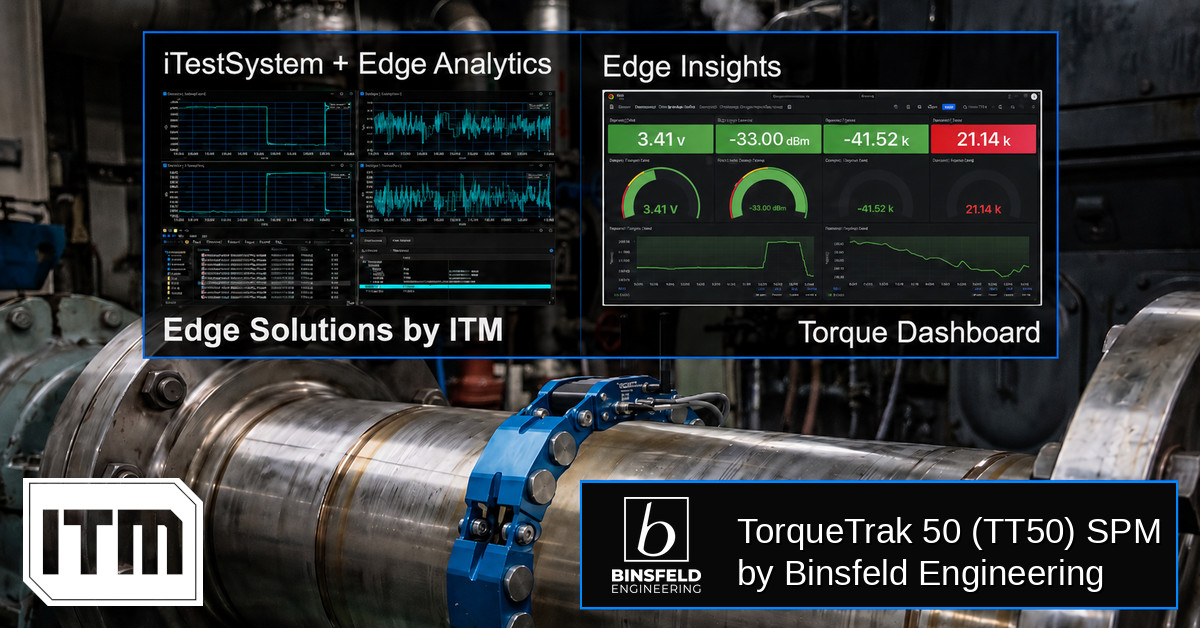
Torque-based Edge Insights: ITM iTestSystem Automated Analytics + Binsfeld TT50
In industrial and marine environments, the drivetrain is often the most critical — and least monitored — part of the system. Rotating shafts transferring torque through gearboxes, couplings, and propellers generate enormous forces that, left unmeasured, become the root cause of unexpected failures, unplanned downtime, and costly maintenance cycles. Traditional torque measurement solutions require shaft…
-
 Ash Hopper Monitoring, Boiler Monitoring, Condition Monitoring, Edge Solutions, Industrial Data Acquisition, industrial IoT, Industrial Monitoring, Power Plant Monitoring, Predictive Maintenance, Recovery Boiler, sootblower monitoring, Strain Gauge Monitoring, Thermocouple Monitoring, vibration monitoring, Wireless Monitoring
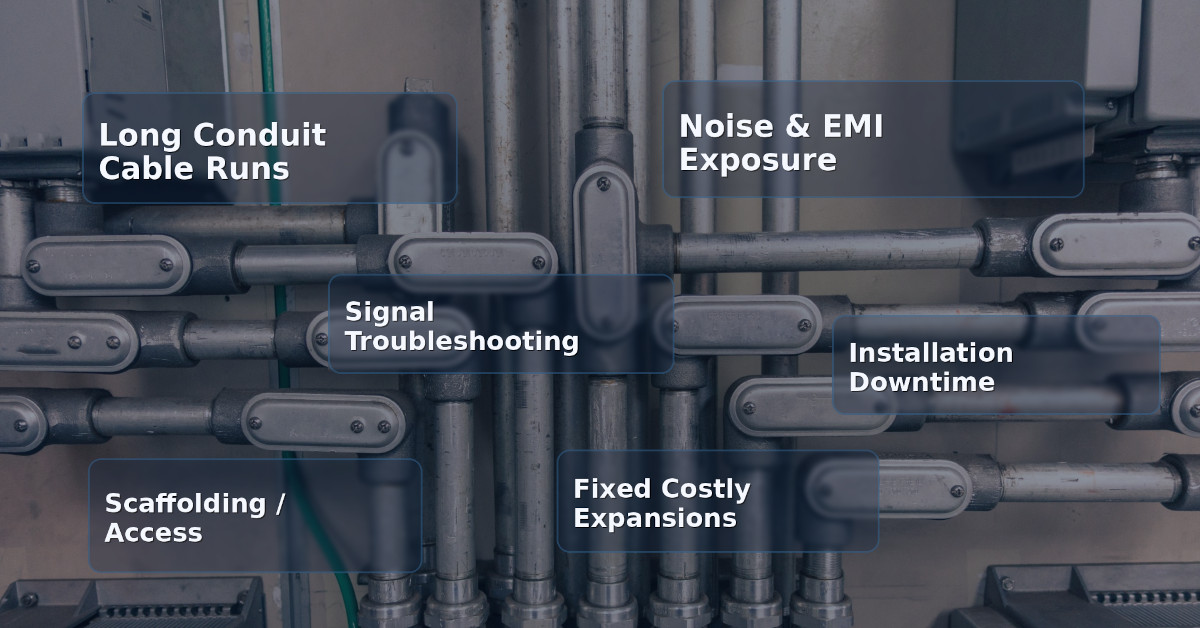
Hardwired vs. Wireless Industrial Monitoring: When Does Wireless Actually Make Sense?
For decades, hardwired data acquisition has been the default standard for industrial monitoring. From strain gauges on structural supports to thermocouples in recovery boilers, running conduit and pulling cable has been considered the “safe”…
-
 Boiler Efficiency, boiler safety, Edge Solutions, intelligent boiler cleaning, ITM monitoring systems, Predictive Maintenance, sootblower monitoring
Smarter Cleaning, Safer Boilers with ITM’s Monitoring Systems
The Business Case for ITM’s Sootblower Intelligent Maintenance and Fouling-Directed Cleaning Solutions Executive Summary Sootblowers are essential for keeping recovery, biomass, and power boilers clean and efficient. However, without proper monitoring and maintenance, they can become hidden sources of steam waste, mechanical failures, and even safety risks. Integrated Test and Measurement (ITM) has developed the…