
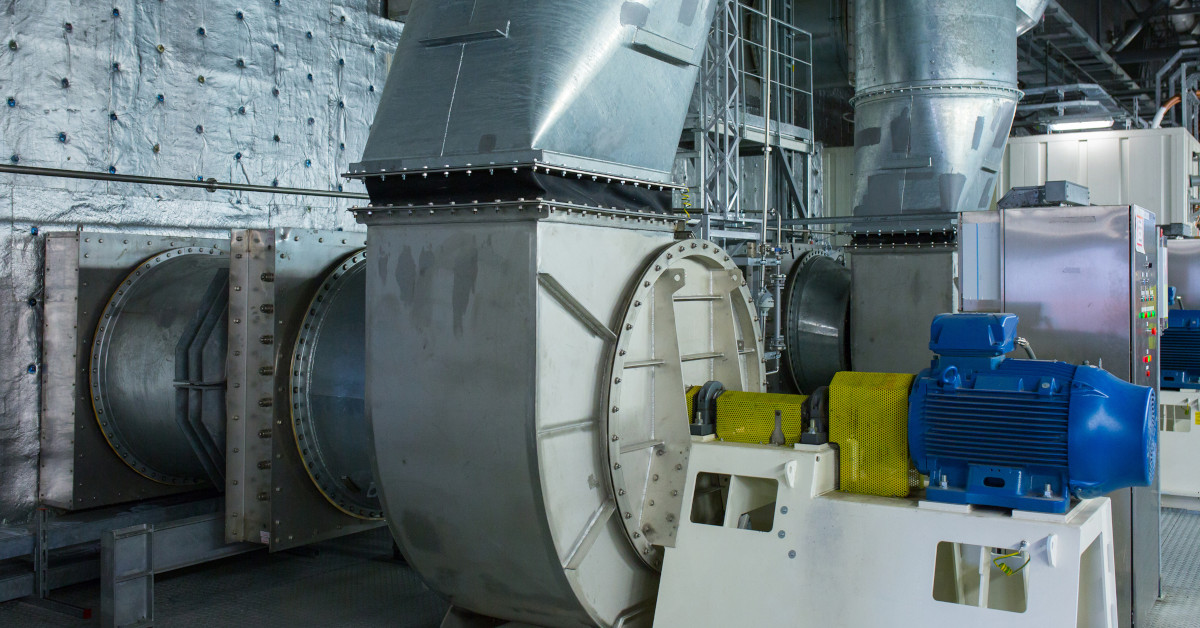
At Integrated Test & Measurement (ITM), our commitment to innovative engineering solutions is exemplified through our expertise in Operating Deflection Shape (ODS) analysis. Recently, our engineering team undertook a challenging project to troubleshoot and resolve mechanical failures in a power boiler Induced Draft Fan. This blog post highlights the critical role of ITM engineers in employing ODS analysis to diagnose and address these complex issues.
What is Operating Deflection Shape (ODS) Analysis?
Operating Deflection Shape analysis is a sophisticated diagnostic tool used in the field of mechanical engineering to visualize and analyze the motion of machines or structures under operational conditions. By measuring and mapping the vibrational patterns, ODS provides a clear picture of how a component moves and deforms, thereby helping to identify the root cause of mechanical failures.
Modal testing (bump tests) to identify the natural frequencies of the structure/system are typically performed to along with the ODS. In the design phase, modal analysis helps in ensuring that the structure’s natural frequencies are away from the operational frequencies. ODS can then validate this in the real world, ensuring the design performs as expected under operational conditions.
The Engineering Challenge:
Our client faced recurring issues with their power boiler’s Induced Draft Fan, a crucial component for maintaining the boiler’s efficiency and safety. The fan experienced unusual vibrations and noise, leading to concerns about potential failure and downtime.
ITM’s Approach:
Our team of skilled engineers approached the problem methodically:
- Data Collection: We used state-of-the-art sensors and data acquisition systems to capture the fan’s vibrational data while in operation.
- Analysis: Utilizing advanced ODS analysis software, we processed the collected data to create a visual representation of the fan’s deflection patterns.
- Identification of Problem Areas: The ODS analysis revealed specific areas where abnormal vibrations were occurring, which were not apparent during routine inspections.
- Root Cause Analysis: We correlated the ODS data with the fan’s design and operational parameters, leading to the identification of potential causes such as imbalance, misalignment, or structural weaknesses.
Solution and Implementation:
Based on our findings, we recommended a series of corrective actions:
- Balancing and Alignment: Adjustments were made to correct the imbalance and misalignment identified in the fan.
- Structural Reinforcement: We suggested modifications to the fan’s supporting structure to mitigate the effects of identified weak points. Our engineers used FEA modeling and simulations to make sure the fix we suggested corrected the vibration issue and did not add other issues.
- Continuous Monitoring: We implemented a continuous monitoring system for early detection of any future issues.
Results:
Post-implementation, the Induced Draft Fan showed significantly reduced vibrations and noise levels, leading to improved operational efficiency and reduced risk of downtime.
Conclusion:
This project showcases ITM’s expertise in applying sophisticated engineering techniques like ODS analysis to solve real-world problems. Our commitment to technical excellence and innovative solutions remains the cornerstone of our approach to every challenge.
For more information about Operating Deflection Shapes (ODS) or our Engineering and Testing Services, contact Mark Yeager at (844) 837-8797 x701.
Wrestling with unexplained vibration or noise in rotating equipment? Talk to our engineers about an ODS study.
Related solutions
Testing Services
Vibration troubleshooting, modal testing, and ODS studies on real structures and rotating equipment. Explore →
Engineering Consulting
FEA modeling and correlation to validate fixes before they go back into service. Explore →
Data Acquisition (DAQ)
The sensors and acquisition hardware behind every ODS and vibration dataset. Explore →
Recent insights
-
 Aerospace Engineering, Aerospace Testing, Blue Origin, Engineering, ESCAPADE Mission, Launch Vehicle Engineering, New Glenn, Rocket Reliability, Strain Measurement, structural health monitoring, Structural Testing
How Pre-Launch Structural Testing Ensures Mission Success
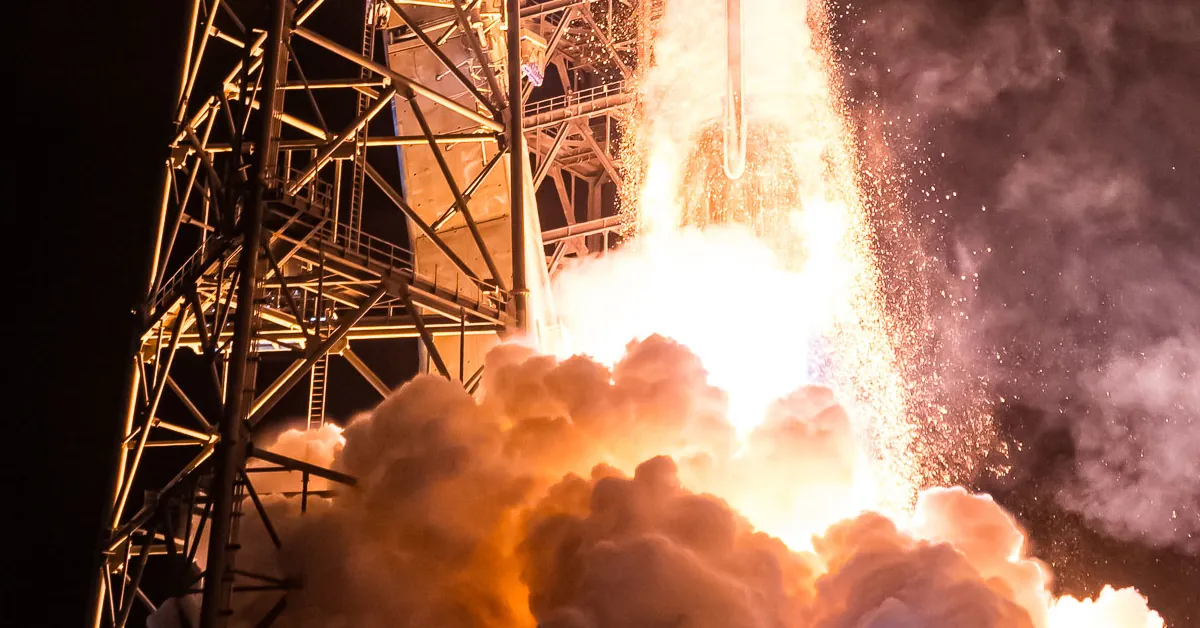
When Blue Origin’s New Glenn rocket successfully launched NASA’s ESCAPADE mission to Mars, it marked a historic step forward for commercial launch technology — and a testament to the unseen engineering that happens long before a vehicle ever reaches…
-
 6D Testing & Analysis, Accelerometers, data acquisition systems, design validation, Engineering, engineering measurement, experimental modal analysis, impact hammer testing, mechanical engineering, modal testing, structural dynamics, Structural Testing, vibration testing
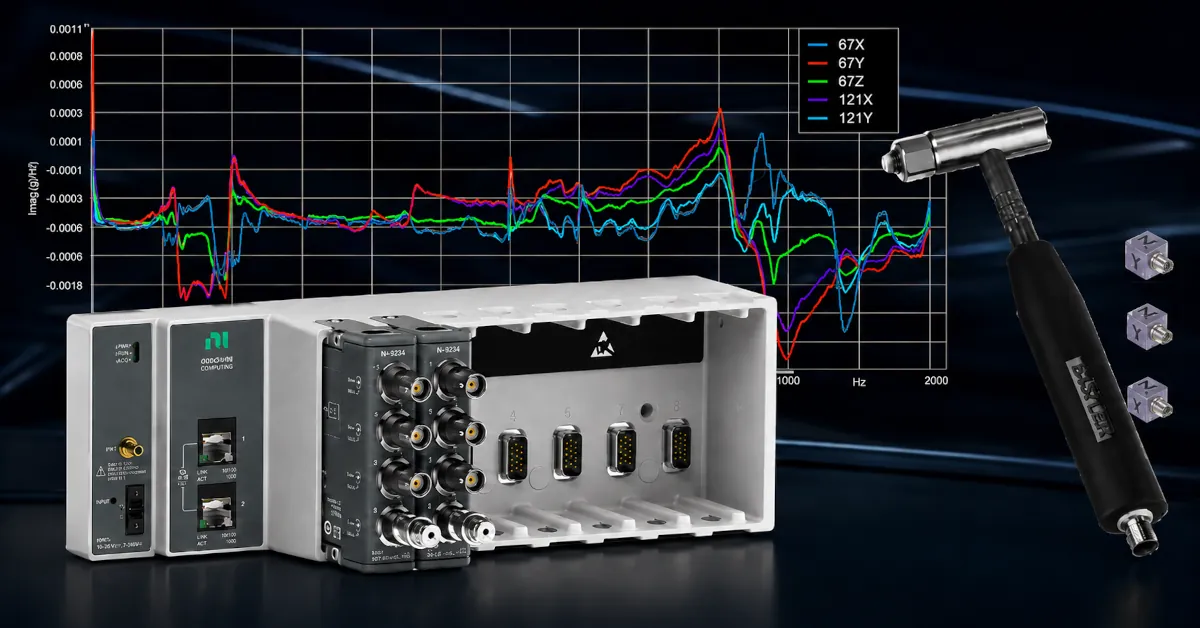
Free Engineering Guide: How to Perform Experimental Modal Analysis for Better Structural Insight
Understanding how structures vibrate—and why—is essential across nearly every engineering discipline. Whether you’re working on rotating machinery, industrial equipment, robotics, medical devices, heavy vehicles, consumer products, or building-scale…
-
 AWS IoT Analytics, cDAQ-9189, Channel Synchronization, CompactDAQ, Condition-Based Maintenance, Edge-to-Cloud High-Channel Datalogging, Engineering, Instrumentation, iTestSystem, iTestSystem Automated Analytics, iTestSystem Notification Service, NI-9236, NI-9469, Strain, Stress, structural health monitoring
High Channel Count Synchronous Datalogging
When a manufacturer needed to validate the structural performance of a 38-ton on-highway vehicle, ITM deployed a 200+ channel synchronous datalogging system capable of capturing accelerometer, strain, GPS, and speed data at nearly 2 kS/s per channel…