
Edge Solutions
FMS — Fouling Monitoring System
“See the slag building up — and blow soot where the boiler is dirty, not on a timer.”
FMS is the hanger-rod load technology inside ITM Connect CleanPass, where it provides the Hanger Rod Load module.
FMS — Fouling Monitoring System
The tube banks in a boiler hang from rods. As ash and slag build up, the tubes get heavier and the load on those rods changes. FMS puts calibrated strain gauges on the hanger rods and turns the strain into load — a direct, mechanical measure of how much deposit is there.
Flue-gas temperature, differential pressure and visual inspection all infer fouling, and lag behind it. FMS weighs it. Because each rod is measured on its own, FMS shows where the boiler is fouling, not only that it is.
In the animation each dot is a hanger rod seen from above; the shading grows as deposit adds load.
What FMS tells you
- Zone-level fouling maps — deposit weight by rod and by zone, trended over time and lined up with boiler conditions and sootblower activity.
- Fouling rate — the gradual load increase as deposits build, compared section to section.
- Shedding — the sudden load drop when deposits fall, tied to the sootblower pass that caused it.
- Uneven fouling — sections that foul faster than others, from fuel changes or burner imbalance.
- Outage planning — which section is heading for trouble, before it plugs.
At a glance: Full-bridge strain gauges on the hanger rods · each rod measured on its own · wired or wireless · shunt calibration and load tare · data to the DCS, historian, ITM dashboards or cloud · economizers, generating banks, superheaters and other suspended tube sections.
Weigh the deposit, don’t guess at it. A strain measurement on the rod responds to the deposit itself, not to a process signal downstream of it — so a section that is loading up shows as a rising trend before draft loss or temperatures move. Paired with SFD, it is the basis for fouling-directed sootblowing: clean where the weight is, skip where it isn’t.
Wired or wireless
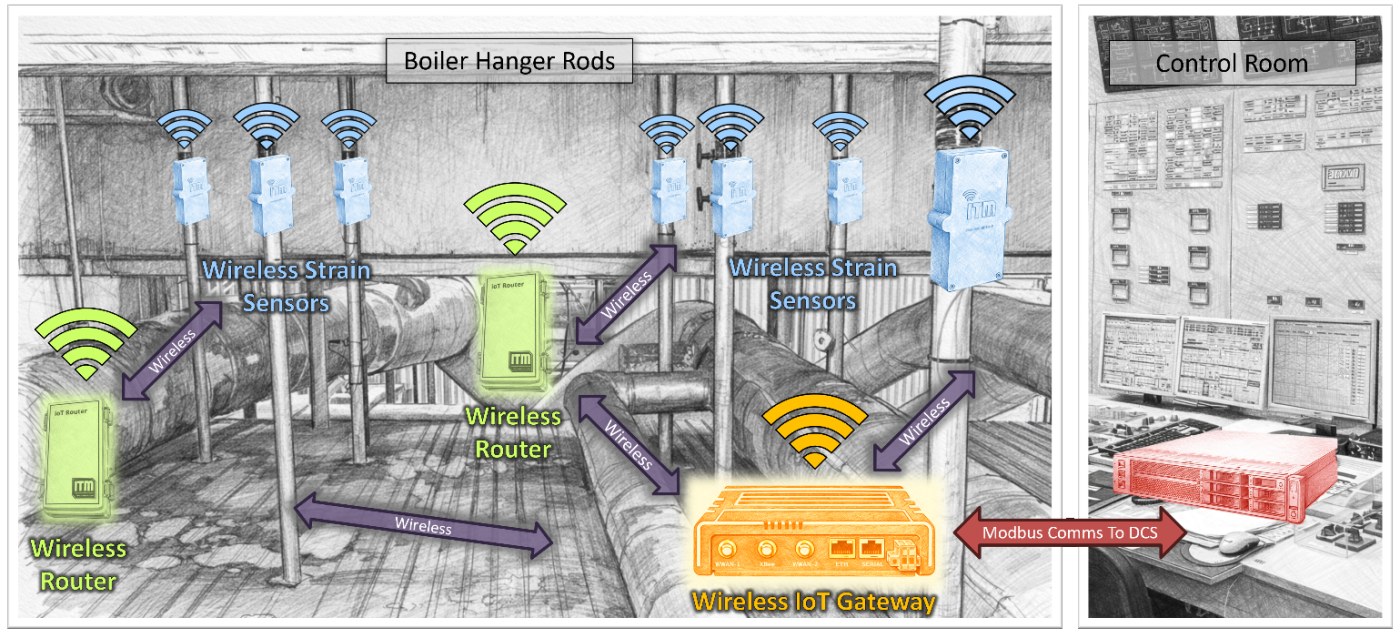
Wired FMS
Strain gauges on the hanger rods are connected to an ITM monitoring system near the boiler, the established installation on recovery boilers.
Wireless FMS
A battery-powered strain node on each rod, routers only where steel blocks the signal, and a gateway in a cooler, accessible spot. No long cable runs, few penetrations through the boiler walls, faster installation during an outage, and rods are easy to add later.
Beyond the recovery boiler
Biomass-fired, waste-to-energy and coal-fired boilers, and boilers where wiring is hard to get to. FMS trends also show when pulse or acoustic cleaning is due.
Patented technology, on more than 40 recovery boilers. Fouling-directed cleaning with FMS and SFD: up to 50% less sootblowing steam, typically 33%, and water washes often reduced to once a year.
Already running FMS? It comes into ITM Connect CleanPass as the Hanger Rod Load module, is kept current, and the vibration modules can be added when you are ready.
Further reading:
Next step: see the complete picture in ITM Connect CleanPass.
Talk to an engineer: (844) 837-8797 · info@iTestSystem.com
Related Edge Solutions resources
-
Wireless Torque. Connected Fleet. Meet ITM at the International WorkBoat Show 2026
Visit ITM at the International WorkBoat Show in New Orleans, Dec. 2–4, 2026, and see how ITM Connect turns shaft torque into insight for one vessel or a fleet.
-
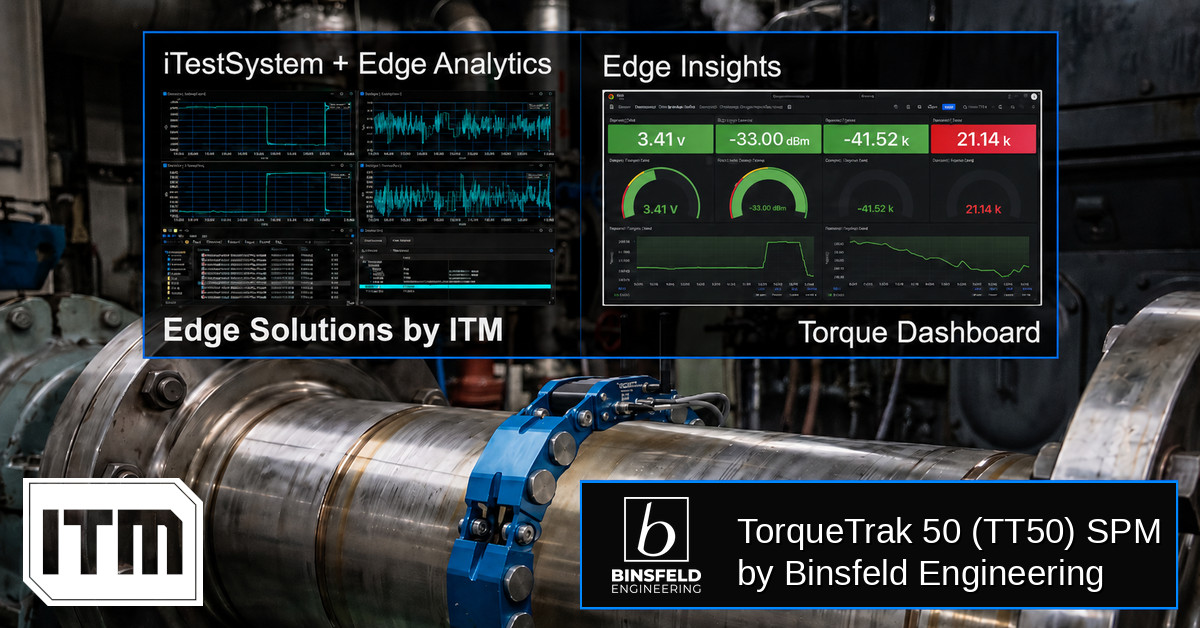
Torque-based Edge Insights: ITM iTestSystem Automated Analytics + Binsfeld TT50
In industrial and marine environments, the drivetrain is often the most critical — and least monitored — part of the system. Rotating shafts transferring torque through gearboxes, couplings, and propellers generate enormous forces that, left unmeasured, become the root cause of unexpected failures, unplanned downtime, and costly maintenance cycles. Traditional torque measurement solutions require shaft…
-
 Ash Hopper Monitoring, Boiler Monitoring, Condition Monitoring, Edge Solutions, Industrial Data Acquisition, industrial IoT, Industrial Monitoring, Power Plant Monitoring, Predictive Maintenance, Recovery Boiler, sootblower monitoring, Strain Gauge Monitoring, Thermocouple Monitoring, vibration monitoring, Wireless Monitoring
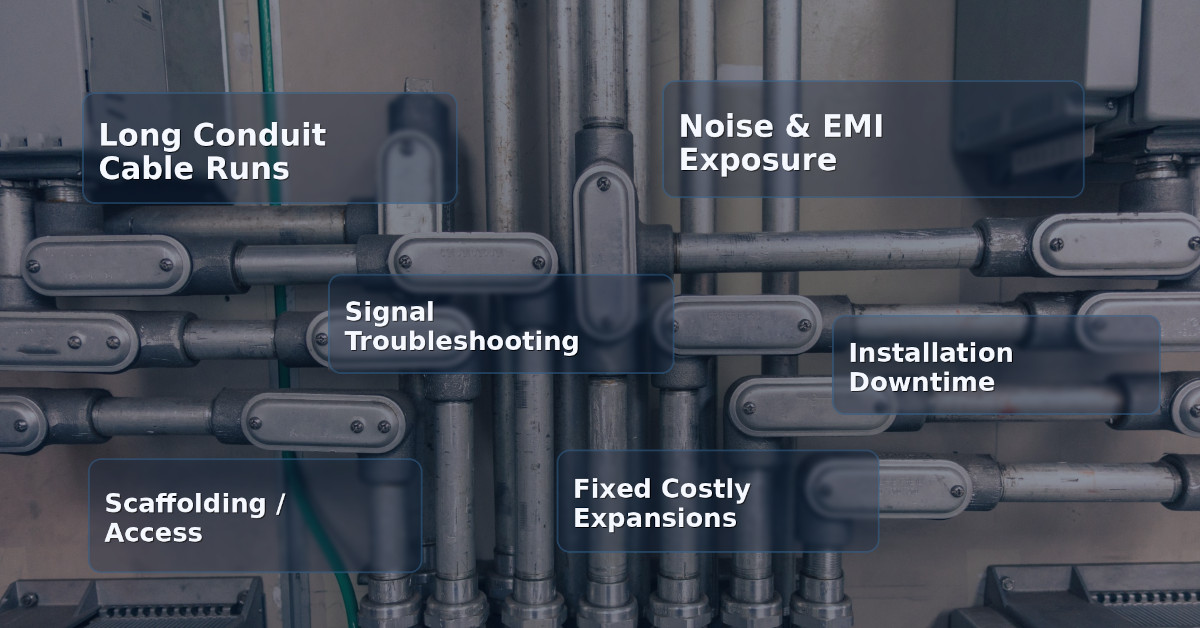
Hardwired vs. Wireless Industrial Monitoring: When Does Wireless Actually Make Sense?
For decades, hardwired data acquisition has been the default standard for industrial monitoring. From strain gauges on structural supports to thermocouples in recovery boilers, running conduit and pulling cable has been considered the “safe”…