
Edge Solutions
SHOP — SuperHeater Overheat Protection + ITM Connect
“Startup protection for the most expensive tubes in the boiler.”
SHOP — SuperHeater Overheat Protection
- Detects the tube-clearing event on every instrumented superheater leg during startup — confirmation that the condensate has gone, not an assumption from a clock.
- Names the leg that clears late, against its own neighbours and its own history, before it reaches its metal limit.
- Keeps the seconds each leg spends above its limit as a duty ledger, so outage tube sampling works from a ranked list.
- Reads the tube-metal thermocouples the boiler already has, and records every startup end to end for the DCS, the historian and the engineering review.
- Built on ITM’s patented startup method — US 9,541,282 B2.
SHOP — Superheater Protection App
A superheater tube is cooled by the steam passing through it. During a startup it is not passing steam: condensate sits in the low bends of its loops, and until that condensate is pushed out the tube is uncooled metal in a rising gas temperature. Following the boiler maker’s startup curve does not establish that every loop has cleared, so the firing rate is held back on a clock. SHOP reads the tube-metal thermocouples instead. Running on ITM Connect at the edge, the Superheater Protection App reads every instrumented leg once per second on one time base, detects the tube-clearing event on each, and does three things with the result at once: shows which legs have cleared while the start is still running, publishes an all-clear for each bank to the DCS, and records the whole start for review.
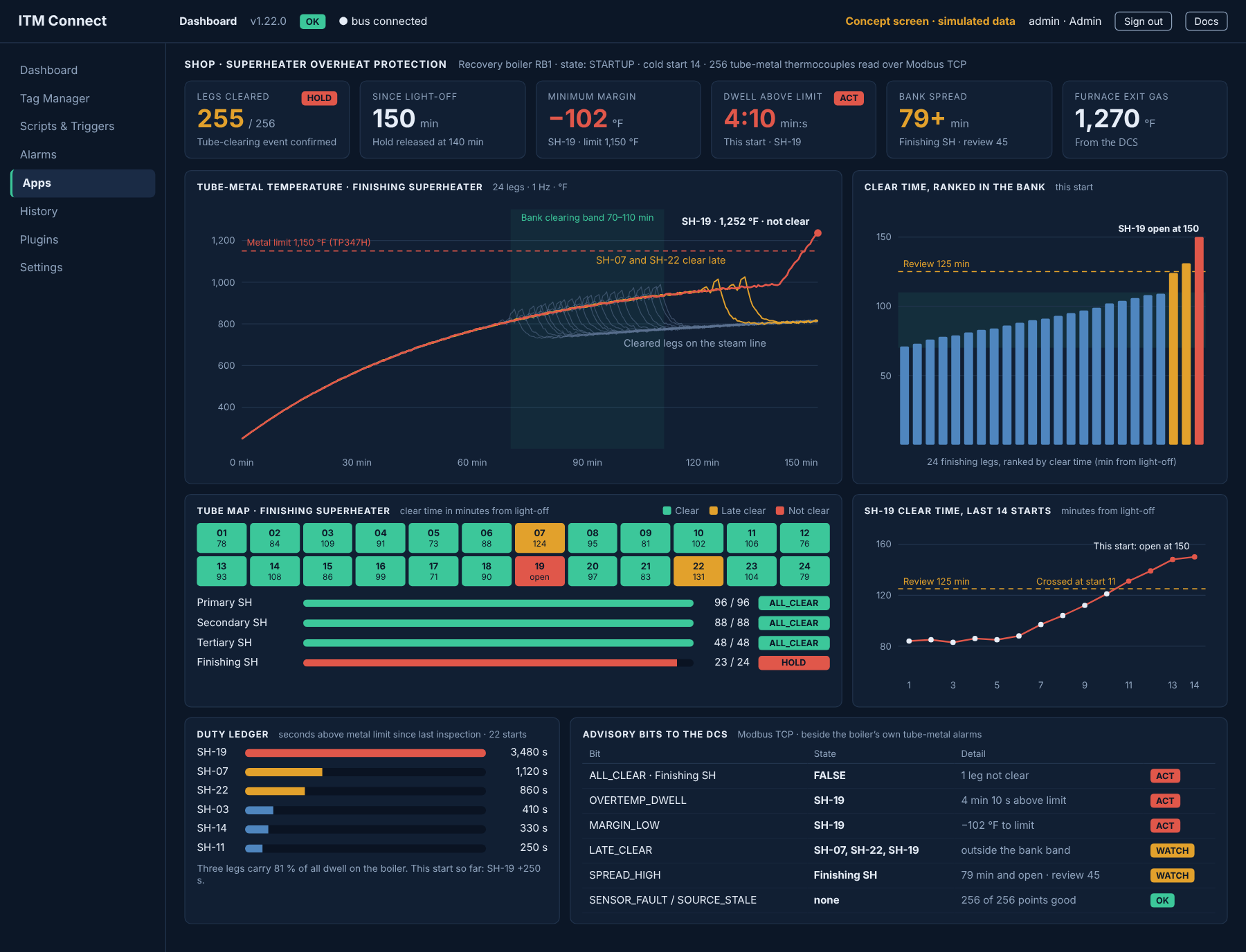
- Tube-clearing event, per leg — the characteristic signature of steam breaking through the condensate is detected on each leg, with a TUBE_CLEAR bit for every leg and an ALL_CLEAR for every bank.
- Margin to the metal limit — each leg is judged against the short-term overheat limit entered for its own alloy, not one boiler-wide number.
- Clear time, ranked — every leg’s clear time is ranked within its own bank on every start and compared with that leg’s own history, so the late leg names itself.
- Duty ledger — seconds above limit are integrated per leg and accumulated from one inspection to the next.
- Every start on record — each startup is captured end to end and each excursion with time before and after, with a report per start.
- Publishes it to the mill — advisory bits and values to the DCS and historian over Modbus TCP, with OPC UA and MQTT available.
At a glance: Reads the existing tube-metal array over Modbus TCP · 1 Hz per point on one time base · Type K and Type N thermocouples · limits entered per leg by alloy · excursions captured with 120 s before and 600 s after · Modbus TCP, OPC UA and MQTT · advisory beside the boiler’s own alarms.
The tube-clearing event is the differentiator. A threshold temperature does not prove a tube has cleared — a terminal thermocouple can read hot with condensate still in the loop, which is what happens in a failure. A clearing event has a fingerprint: a rapid temperature rise over a few minutes as steam pushes through the last condensate, then a drop as flow establishes. SHOP detects that fingerprint on every leg, so the firing rate comes up on evidence, and the leg that has not cleared is the one on the screen. Each leg sets its own TUBE_CLEAR bit when the fingerprint is confirmed, and the bank’s ALL_CLEAR follows the last one.
Why startups fail superheater tubes
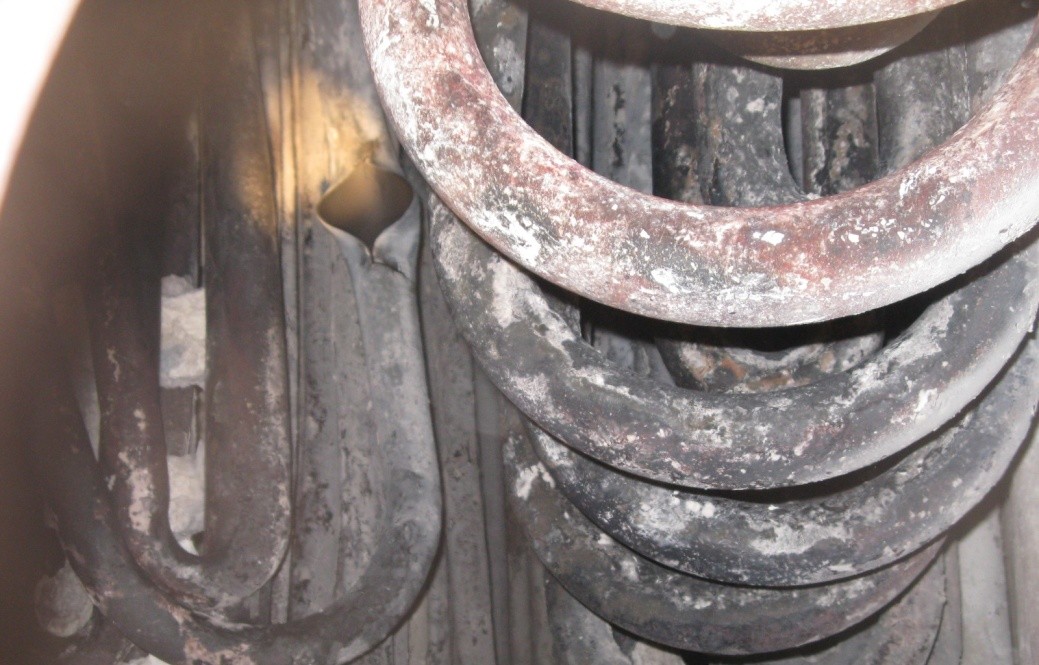
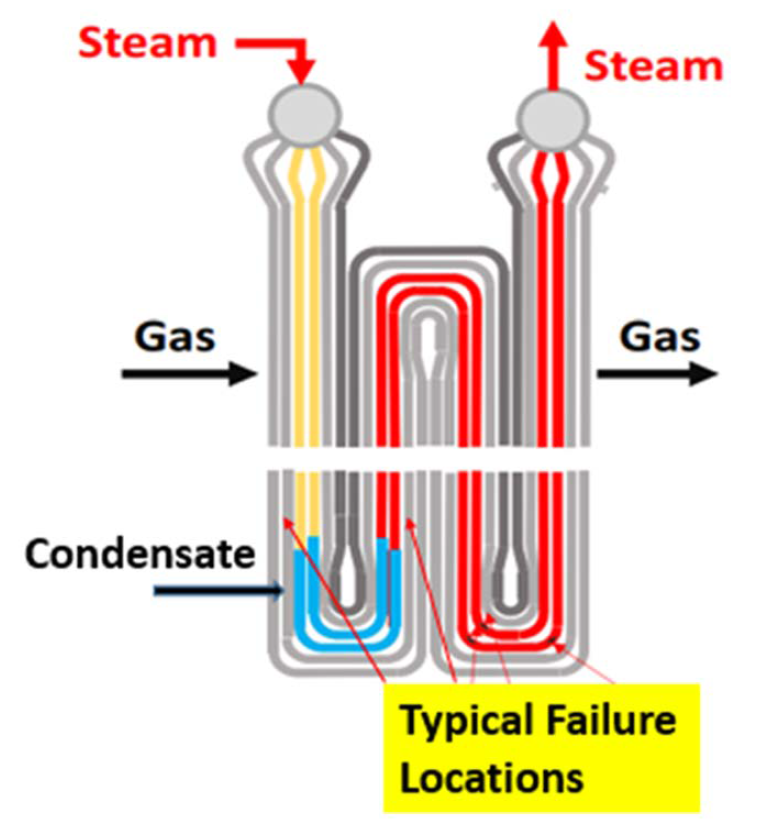
Condensate collects in the lower tube bends during any downtime. It blocks the steam flow through that tube and removes the cooling downstream, so the tube overheats where the gas is hottest. Short-term overheat can rupture a tube within minutes; it can also bow or swell tubes and break attachments without an immediate leak. A ruptured tube can strike its neighbours, and an unrecognized leak risks secondary failures in screen and water wall tubes.
Operators usually hold a low load until the terminal thermocouples reach a threshold temperature. That has two drawbacks: a threshold does not ensure the tube is free of condensate, and a large recovery boiler has upwards of 250 thermocouples to watch during the busiest hours of the outage, with the boiler on the critical path.
One start. Three numbers.
Every leg on a bank sees the same gas, the same drum pressure and the same startup curve; they differ only in how quickly each one clears. The bank is its own baseline — so the question is not whether a temperature is too high, but which leg is late, whether it is getting later, and how much duty it has already taken.
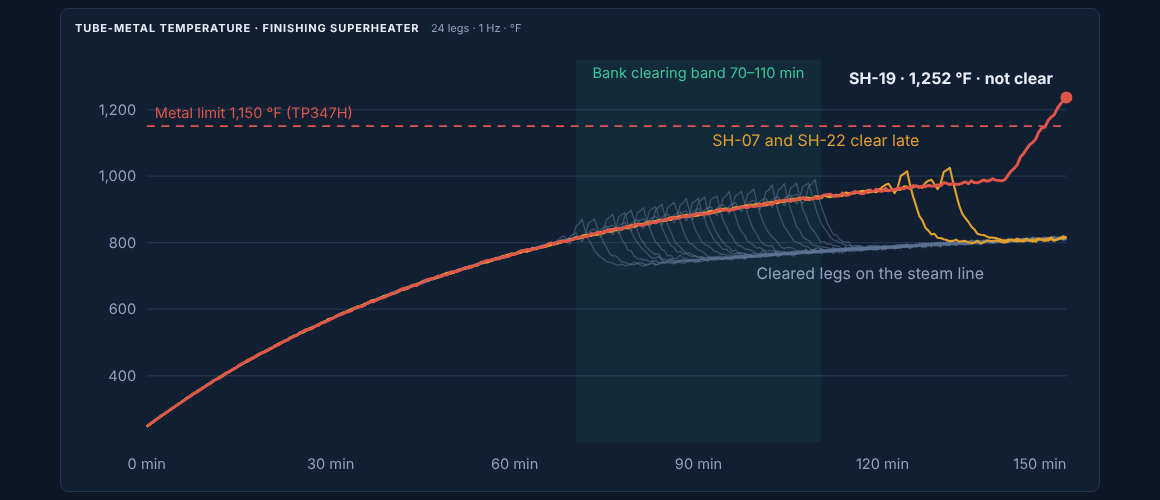
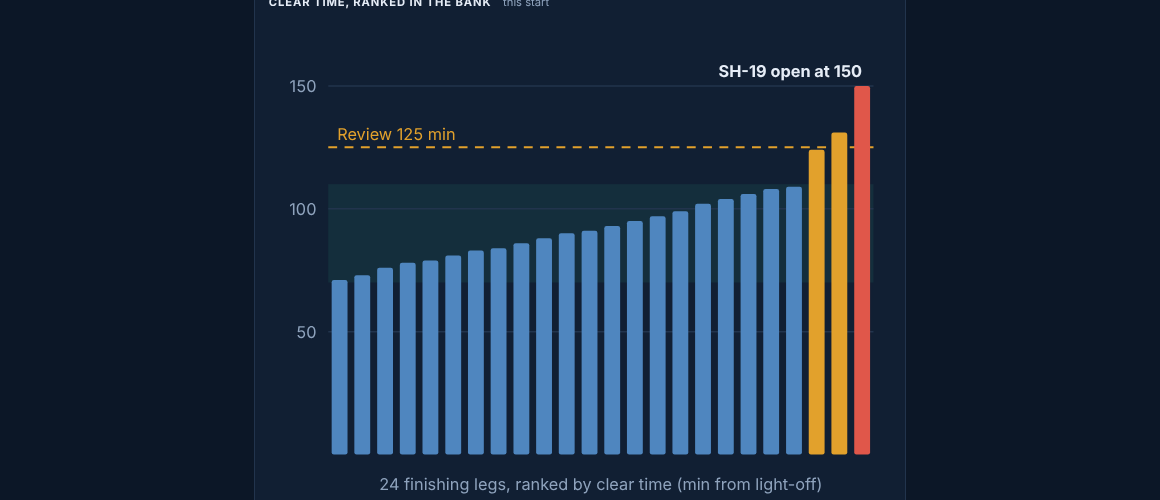
Clear time, ranked in the bank
Minutes from light-off to the confirmed clearing event on each leg, ranked against every other leg on the same bank and against that leg’s own last starts.
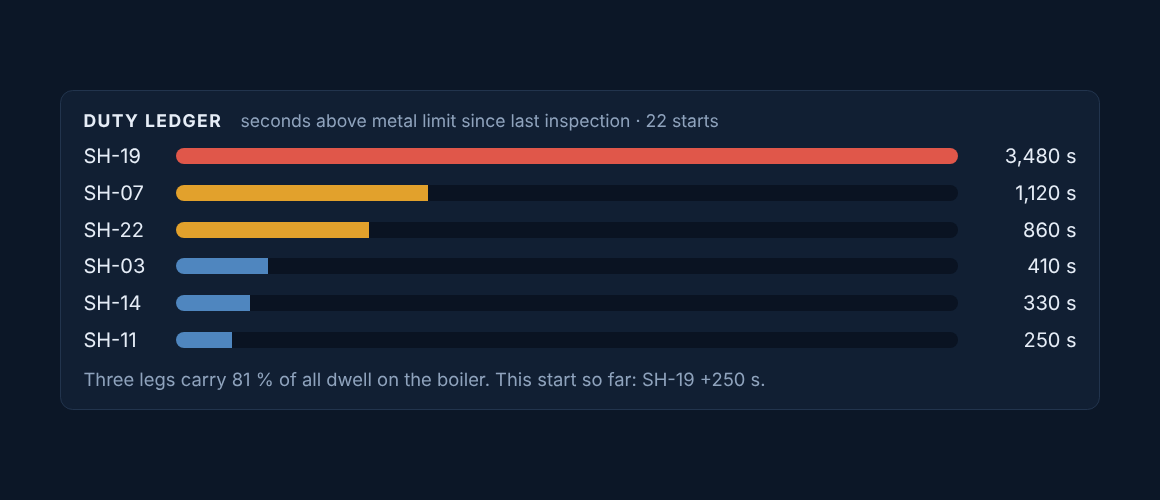
Dwell above limit
Seconds with the metal above its entered limit, integrated per leg and accumulated since the last inspection. Creep damage follows time at temperature, not the peak reached.
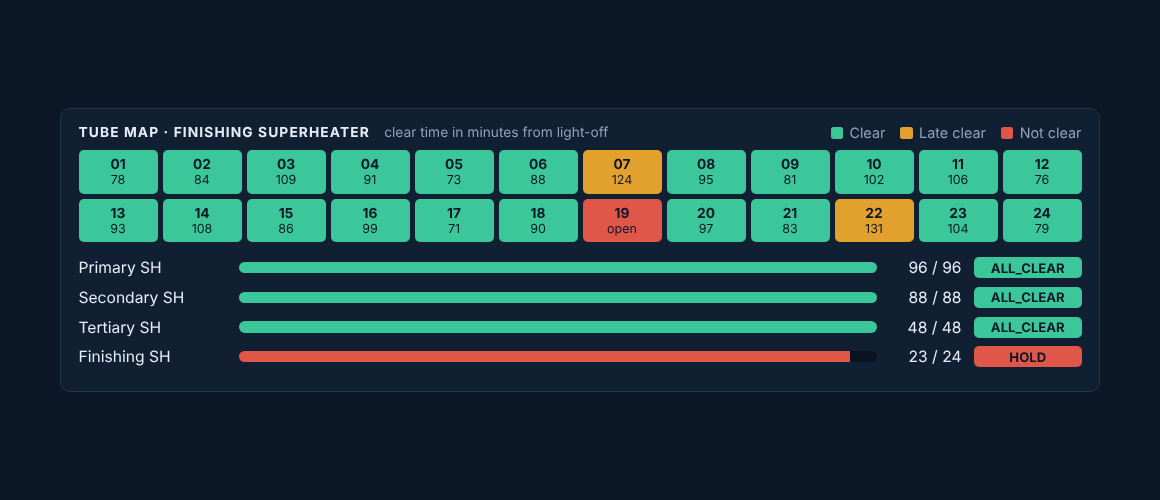
Time to all clear
The minute at which the last instrumented leg on a bank is confirmed clear, against the minute the procedural hold was actually released on that start.
Read the thermocouples you already have
Most recovery boilers already carry thermocouples on the superheater terminal tubes. Where they exist and a plant system reads them, SHOP takes that data over Modbus TCP and adds nothing in the penthouse. Where a boiler has none, ITM Wireless Thermocouple Nodes are fitted to a deliberately chosen set of legs.
Existing tube-metal array
Wireless thermocouple nodes
Plant measurements from the DCS
Proven on recovery boilers
SHOP was developed with a major pulp and paper producer and first described at the International Chemical Recovery Conference. The original system managed startup like a burner management system: operating states, permissives, authority levels and overrides, with every startup documented — or it could run as an advisory system, as the mill preferred. Four systems have been installed, and the 2025 update reported what operators learned from them.
- Operators could quickly detect, track and verify tube-clearing events in real time.
- Persistent condensate near tube edges and corners was cleared by “burping” the boiler through the superheater relief valve.
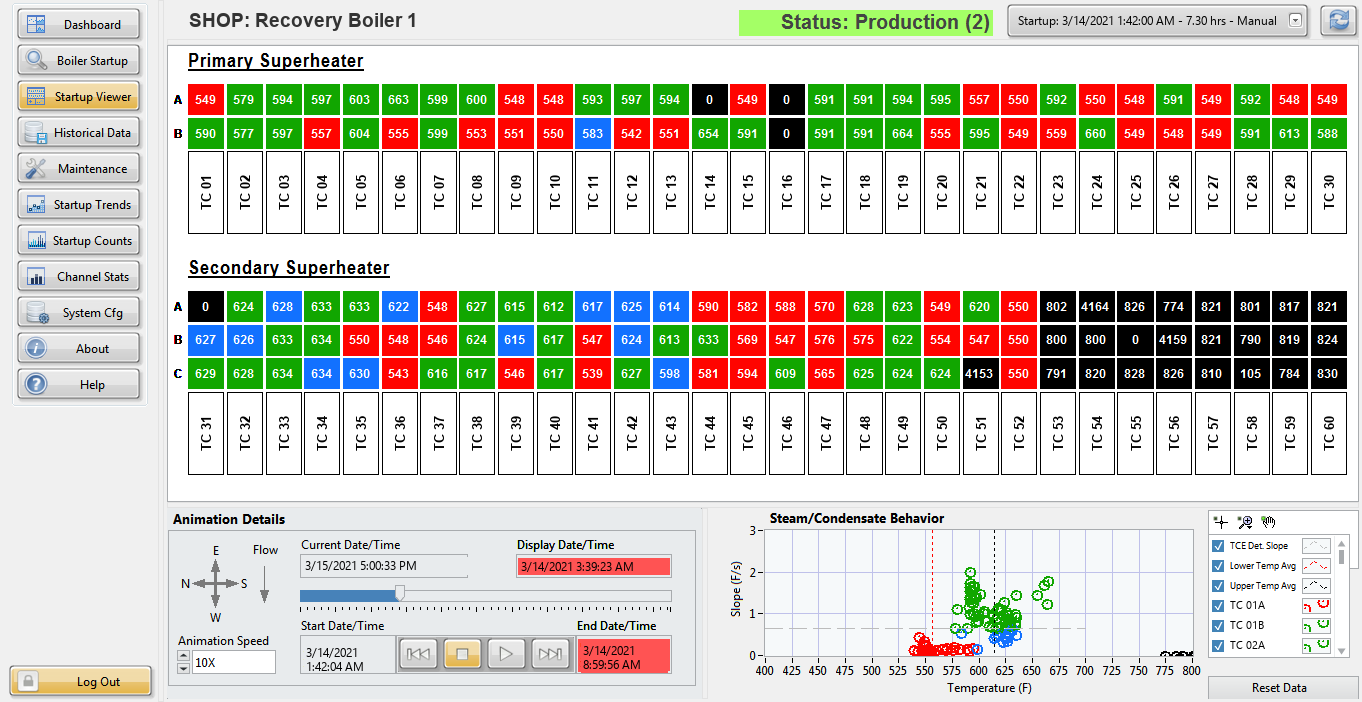
- Grouping tubes by temperature let operators see uncleared and slow-clearing tubes at a glance.
- Trips during a restart, especially with a fouled superheater, are the hardest cases — discipline on the ramp-up matters after every pause in steam generation.
Why it matters
The recovery boiler is the single-line bottleneck of a kraft mill. Over the ten years to 2019, 573 recovery boiler incidents were reported to BLRBAC across the North American fleet, with a median of 46 hours of downtime each; 13% were in the superheater area, and 73% of tube leaks were found by an operator walking the boiler, not by an instrument. The startup hold that protects the superheater is also paid for in mill time, because it is set long enough to cover the worst leg on the worst day. SHOP addresses both: it confirms clearing leg by leg instead of assuming it, and it names the leg that is drifting late in the starts before it does damage.
SHOP is advisory. It sits beside the boiler’s own tube-metal alarms and BLRBAC-classified instrumentation, which remain the protection. It is not part of the emergency shutdown procedure, it does not detect water leaks into the furnace, and any change to the startup curve is the mill’s and the boiler maker’s decision.
A typical deployment
- Decide the path. Establish what tube-metal thermocouples the boiler carries and how they are read today.
- Survey. Walk the penthouse with the drawings and the thermocouple schedule: every point by bank, leg, type and condition.
- Enter the limits. Agree the short-term overheat limit for each leg’s alloy with the mill metallurgist and the boiler maker.
- Connect the plant tags. Light-off, firing rates, drum pressure, main steam flow and the vent and drain valve states.
- Baseline. The first cold start sets the band each bank clears in; two or three starts set the review levels.
- Review the procedure. After the first several starts, review the hold points and the vent and drain timing against what the tubes did.
References: published sources behind this page.
- A. Jones and T. Carlier, “Avoiding Short Term Overheat Failures of Recovery Boiler Superheater Tubes”, International Chemical Recovery Conference — the tube-clearing event, the system and the first installation.
- A. K. Jones, J. Wagoner and A. MacIntire, “An Update on the Use of SHOP to Avoid Superheater Tube Overheating During Startups”, 2025 International Chemical Recovery Conference — installations and operating experience.
- US 9,541,282 B2 — the patent covering the startup method.
- D. French, “Short Term High Temperature Failures”, The National Board of Boiler and Pressure Vessel Inspectors — the short-term overheat mechanism.
- BLRBAC incident questionnaires, autumn 2009 to spring 2019, as analysed by FORNAX Services in 2019 — incident counts, downtime and where leaks were found.
Part of ITM’s patented boiler monitoring family installed worldwide.
Next step: pairs with a BTM install and startup-procedure consulting.
Talk to an engineer: (844) 837-8797 · info@iTestSystem.com
Related Edge Solutions resources
-
Wireless Torque. Connected Fleet. Meet ITM at the International WorkBoat Show 2026
Visit ITM at the International WorkBoat Show in New Orleans, Dec. 2–4, 2026, and see how ITM Connect turns shaft torque into insight for one vessel or a fleet.
-
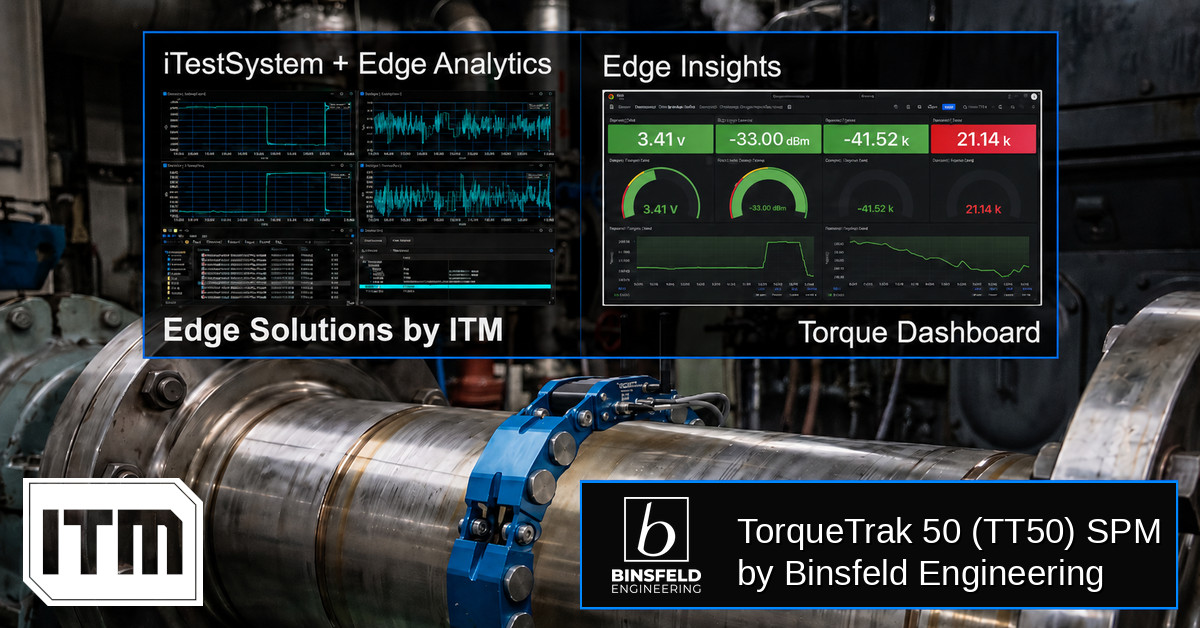
Torque-based Edge Insights: ITM iTestSystem Automated Analytics + Binsfeld TT50
In industrial and marine environments, the drivetrain is often the most critical — and least monitored — part of the system. Rotating shafts transferring torque through gearboxes, couplings, and propellers generate enormous forces that, left unmeasured, become the root cause of unexpected failures, unplanned downtime, and costly maintenance cycles. Traditional torque measurement solutions require shaft…
-
 Ash Hopper Monitoring, Boiler Monitoring, Condition Monitoring, Edge Solutions, Industrial Data Acquisition, industrial IoT, Industrial Monitoring, Power Plant Monitoring, Predictive Maintenance, Recovery Boiler, sootblower monitoring, Strain Gauge Monitoring, Thermocouple Monitoring, vibration monitoring, Wireless Monitoring
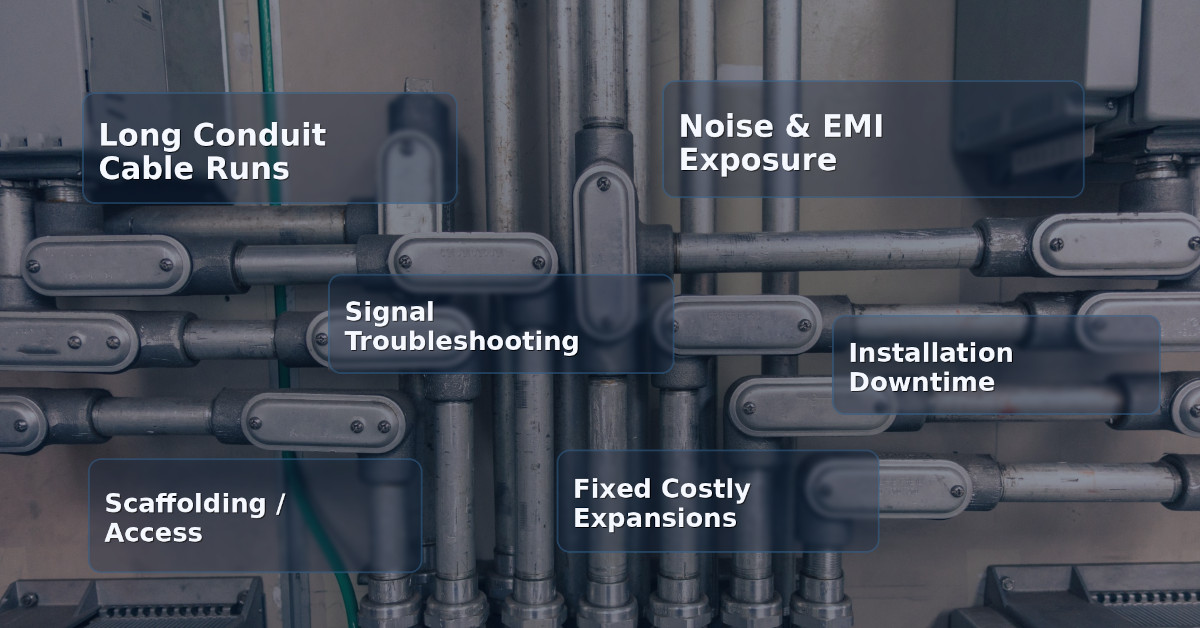
Hardwired vs. Wireless Industrial Monitoring: When Does Wireless Actually Make Sense?
For decades, hardwired data acquisition has been the default standard for industrial monitoring. From strain gauges on structural supports to thermocouples in recovery boilers, running conduit and pulling cable has been considered the “safe”…