Addressing Common Engineering Concerns
While wireless monitoring systems provide clear installation and flexibility advantages, engineers often have questions regarding reliability, communication performance, cybersecurity, and long-term operation in industrial environments. Modern industrial wireless systems are specifically designed to address these concerns.
Communication Reliability
Industrial environments contain large steel structures, electrical equipment, and other sources of electromagnetic interference. Modern wireless monitoring systems mitigate these challenges through techniques such as mesh networking, adaptive frequency selection, and redundant communication paths.
These capabilities allow wireless networks to maintain reliable communication even in complex industrial facilities such as power plants, pulp mills, and utility boilers.
Data Integrity and Availability
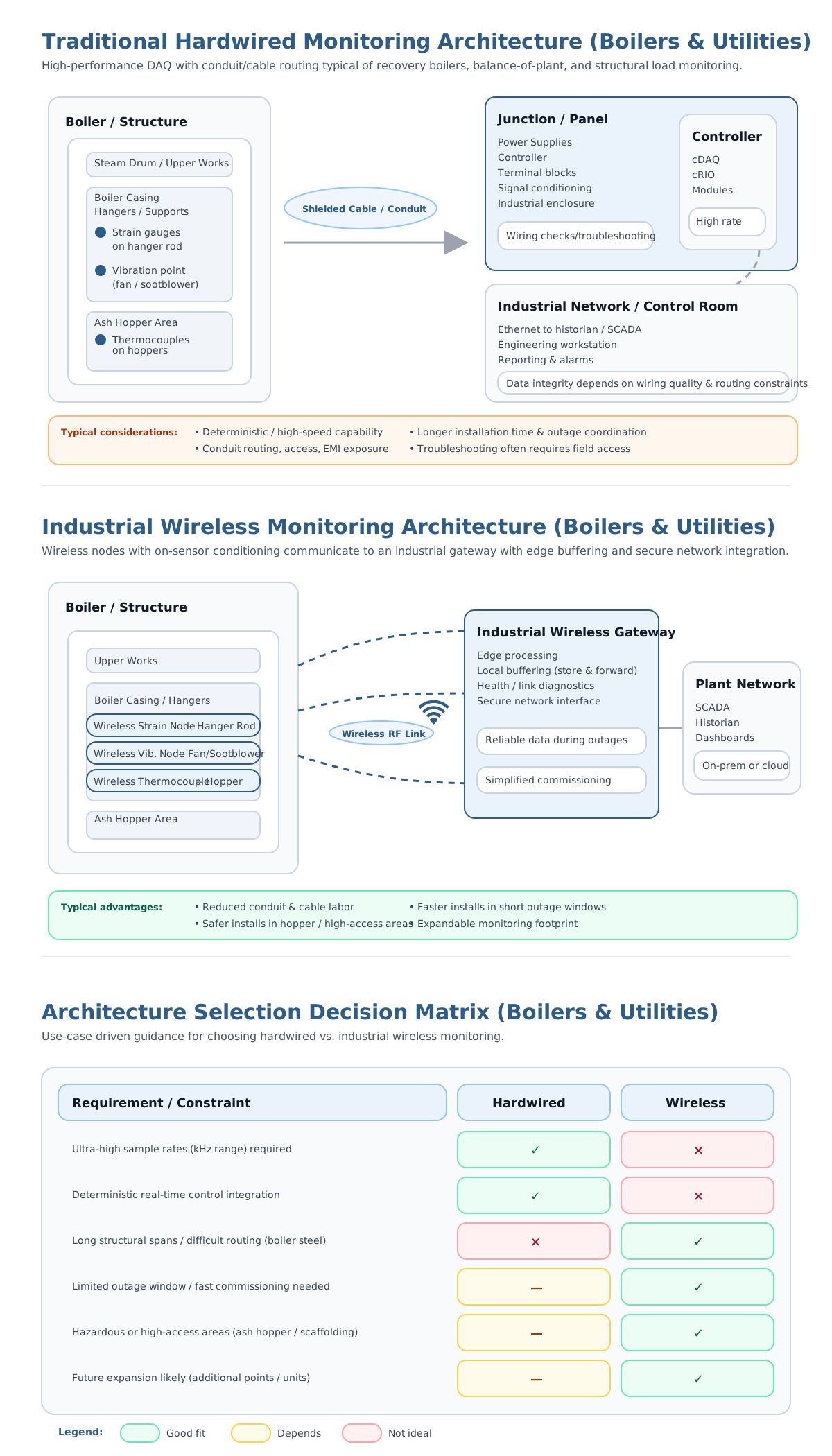
Another common concern is the ability to maintain reliable data collection during network interruptions. Many industrial wireless gateways incorporate edge buffering and store-and-forward capabilities that allow sensor data to be temporarily stored if a network connection is interrupted.
Once connectivity is restored, the data is transmitted to the monitoring system, helping ensure measurement continuity.
Cybersecurity
Security is an important consideration when introducing wireless systems into industrial environments. Modern industrial wireless monitoring systems typically incorporate multiple security mechanisms including encrypted communications, secure device authentication, and controlled network access.
In many deployments, wireless gateways interface with plant networks through established IT or OT security controls such as firewalls, segmented networks, and secure protocols. These protections help ensure that wireless monitoring systems can be integrated into existing infrastructure while maintaining the cybersecurity standards required for industrial facilities.
Power and Maintenance
Wireless sensors are often designed for low-power operation, allowing them to run for extended periods using battery power or local energy sources. In many industrial monitoring applications, this enables sensors to operate for years before maintenance is required.
This approach reduces the need for additional power wiring while still supporting long-term monitoring programs.
Network Scalability
Engineers frequently need to expand monitoring coverage over time as reliability initiatives evolve. Wireless systems allow additional sensors to be integrated into an existing network without installing new conduit runs or signal wiring.
This scalability allows facilities to gradually increase instrumentation coverage across critical assets without major infrastructure modifications.
Suitability for Industrial Monitoring
When properly designed and deployed, wireless monitoring systems can provide reliable performance for many measurement applications including structural load monitoring, vibration measurements, and temperature monitoring.
For applications that require extremely high sampling rates or deterministic control integration, hardwired systems may still be preferred. However, for many monitoring applications, wireless technology provides a practical and efficient alternative.